

Fire Enxtinguishers
Click here to find out more about our extensive range of fire extinguishers

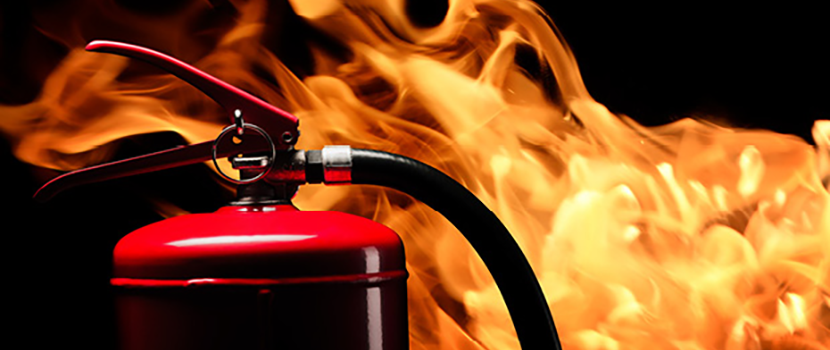
Marine fire extinguishers are selected based on fire class:
- Class A - Fires involving common combustible materials like wood, paper, cloth, rubber, and many plastics
- Class B - Fires involving liquids or liquefied solids, including gasoline, petroleum, oil, paints, and solvents
- Class C - Fires involving gases, such as methane, propane, butane, or hydrogen
- Class F - Fires involving fats and oils used in cooking appliances, typically in deep-fat fryers or kitchens
- Electrical fires
Each extinguisher is clearly labelled with its fire rating.
In most cases, yes. Portable fire extinguishers required under SOLAS must be MED approved when supplied to EU-flagged vessels. For non-EU flags, approval must comply with the relevant flag-state administration requirements.
Fire extinguisher servicing must comply with BS 53063. This requires annual maintenance by a competent engineer and monthly visual inspections by the responsible person to ensure extinguishers remain operational and compliant.
Typically required documents include:
- Certificate of conformity / approval (e.g. MED certificate)
- Service and inspection records
- Manufacturer’s manual
These documents may be checked during port state control inspections.
Yes. Marine fire extinguishers are specifically designed for shipboard conditions, including:
- Corrosion-resistant materials
- Vibration-resistant construction
- Marine-specific approvals and markings
Standard industrial or household extinguishers are not acceptable unless they carry marine approval
Ships may use different types depending on the fire risk and location, including:
- Portable dry powder extinguishers
- CO₂ extinguishers
- Foam extinguishers
- Water mist or water spray extinguishers
The exact type and quantity depend on vessel type, size, and layout, as defined by SOLAS.
The number depends on:
- Vessel type (cargo ship, tanker, passenger vessel, etc.)
- Gross tonnage
- The number of accommodation and machinery spaces
Minimum numbers and locations are defined in SOLAS Chapter II-2.
Fire extinguishers must be:
- Readily accessible
- Clearly marked
- Located close to fire hazards
Typical locations include accommodation areas, engine rooms, control rooms, galleys, and near electrical equipment.
Yes. SOLAS requires spare charges or spare extinguishers for certain types of fire extiguishers.
This varies within the industry and location you are in, but the easiest way is to use the “Contact us” bar and locating the closest Global Customer Service or click the button below.
Fire extinguishers must be:
- Visually inspected regularly by the crew
- Serviced annually by an approved service provider
- Subject to extended inspections (e.g. pressure testing) as required by manufacturer and flag-state rules
Proper documentation must be maintained on board.
To pass PSC inspections:
- Use only marine-approved extinguishers
- Keep servicing records up to date
- Ensure clear markings and accessibility
- Maintain proper documentation on board
Regular service by approved providers is essential.
Only if the replacement extinguisher:
- Is approved for marine use
- Meets the same or higher fire rating
- Is accepted by the vessel’s flag state and classification society
Any substitution should be carefully reviewed.
No. PFAS free foam fire extinguishers are now widely available and increasingly specified to meet environmental and regulatory requirements.
No. Refilling and maintenance must be carried out ashore by certified service stations using approved spare parts and extinguishing media.
Yes. SOLAS requires portable fire extinguishers to be installed in accommodation spaces, corridors, stairways, and public spaces to ensure rapid response in case of fire.
Yes, provided the extinguisher is approved for marine use and meets performance and approval requirements. PFAS-free firefighting agents are increasingly used to meet environmental regulations without compromising safety.
Fire extinguisher storage systems should be selected based on extinguisher type, environmental exposure, access needs, and compliance with safety signage standards.