MSC.581 110 Is More Than A Regulatory Update Header

MSC.581(110) Is More Than a Regulatory Update. It’s a Wake-Up Call for Maritime Safetycompass blog icon

Aleksandra August


Alekandra August, Product Category Manager - Commercial

clock icon    8 minute read


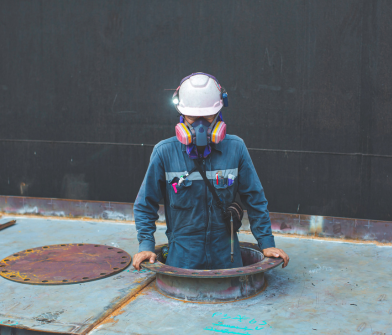
Did you know that between 2000 and 2024, at least 1,010 seafarers and shore workers died in enclosed space incidents?

Enclosed space entry continues to be one of the greatest risks in maritime operations that can lead to fatal consequences.

The new IMO resolution isn’t just another regulatory update. It’s a response to a problem the maritime industry still hasn’t solved: enclosed-space fatalities that persist despite procedures, permits, and training.

Many of those incidents occurred even though permits were being issued, procedures were being followed, and gas detectors were being used.

In this blog, we want to take a deep dive into how MSC.581(110) addresses that gap.


01 What’s changing under MSC.581(110)?

The regulation introduces several important shifts that operators now need to review carefully. CO₂ measurement is no longer optional, four-gas devices may no longer be sufficient, and atmospheric checks can no longer stop at the point of entry.


<0.5%

CO₂ must now
be below 0.5% (5,000 ppm) before entry.


5 gases

Detectors without CO₂ capability may not meet the new expectation.


continuous

Monitoring is expected during entry, not just before work begins.


02 The CO₂ blind spot

One major reason incidents continue is that traditional gas detection has focused on the wrong risks. Standard maritime gas detection typically concentrated on oxygen, flammables, carbon monoxide, and hydrogen sulphide. That left a critical gap because CO₂ behaves differently.

  • It is colourless and odourless, so there are no natural warning signs.
  • It can impair judgement before alarms are triggered.
  • It may accumulate while oxygen readings still appear normal.

This combination has contributed to multiple incidents, particularly in cargo environments such as bulk carriers transporting coal, timber, grain, or scrap metal.


03 Why continuous monitoring matters

Enclosed space entry has often relied heavily on atmospheric checks before entry. However, incidents have shown that conditions can deteriorate rapidly once work begins. MSC.581(110) changes that expectation by pushing monitoring closer to the individual and throughout the duration of the task.

  • Continuous gas monitoring during entry
  • Personal detectors for each individual entering the space
  • Greater accountability at the individual level


Three questions operators should now be asking

  • Do our current detectors measure CO₂?
  • Are calibration routines updated for 5-gas compliance?
  • Are crews continuously monitoring atmospheres during entry or only before?

04 4-gas vs 5-gas detection

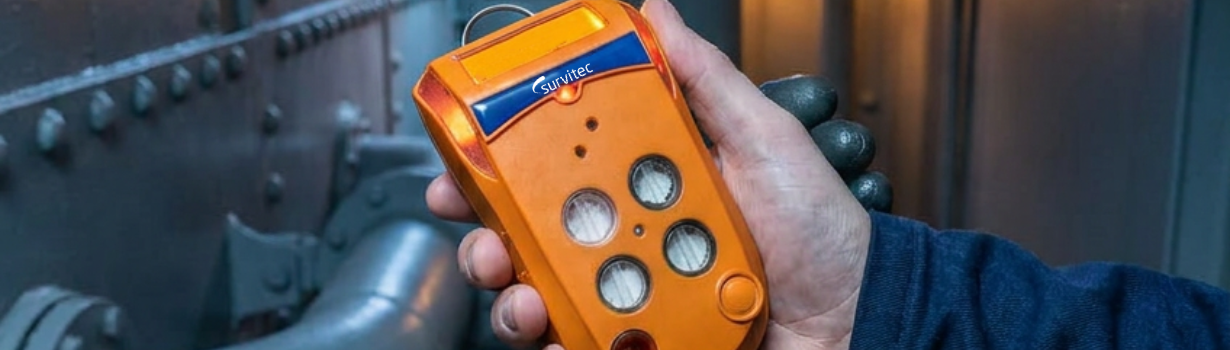
Rather than relying on separate CO₂ monitors alongside traditional four-gas detectors, operators are increasingly moving toward integrated five-gas solutions. Combining all critical gas monitoring into one wearable device reduces complexity while improving visibility of risk.

Feature Traditional 4-Gas detector 5-Gas detector
Oxygen monitoring Yes Yes
Flammables Yes Yes
Carbon monoxide Yes Yes
Hydrogen sulphide Yes Yes
CO2 detection No Yes
Supports MSC.581(110) expectations No Yes, totally aligned
Continuous wearable monitoring Varies Yes
Single-device simplicity No, if paired with separate CO₂ monitor Yes


05 Why the maritime industry is moving toward wearable 5-gas monitoring

MSC.581(110) is already in force and increasingly reflected in inspections, audits, and vetting processes. Yet the significance of the regulation goes beyond compliance.

Enclosed space fatalities have not meaningfully declined.
Many incidents involve experienced personnel, not lack of knowledge.
Existing controls have not been sufficient.
The move toward wearable five-gas monitoring reflects a broader shift: safety systems must work in real operating conditions, not just satisfy paperwork.


06 Supporting the transition to safer operations

For operators, the challenge is not only understanding the regulation, but embedding it effectively across fleets, crews, and procedures. Modern five-gas detection is only part of the transition. Calibration, training, and procedures that support continuous monitoring are just as important.

At Survitec, the focus is on supporting this change in a way that is practical, scalable, and aligned with operational realities.


Want to understand whether your current gas detection approach aligns with MSC.581(110)?

Speak with the Survitec team to learn more about wearable 5-gas monitoring solutions, including Gas-Pro 5, and how fleets can strengthen enclosed space entry safety in practice.

contact us


Overview

    • 01 What is changing under MSC.581(110)
    • 02 The CO₂ blind spot
    • 03 Why continuous monitoring matters
    • 04 4-gas vs 5-gas detection
    • 05 Why the industry is moving toward wearable 5-gas monitoring
    • 06 Supporting the transition to safer operations


Key Takeaway

MSC.581(110) reflects a growing recognition that existing controls have not done enough to prevent enclosed space fatalities, and that continuous wearable 5-gas monitoring is becoming essential to safer maritime operations.

Confined spaces