
Norway’s Brim explorer puts passenger experience at the heart of survival technology selection
11/08/26
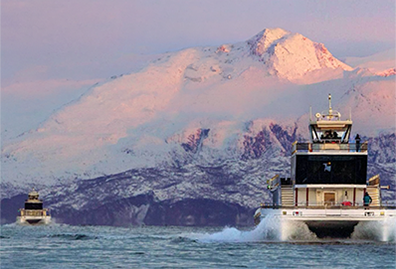
Survitec’s expertise helps Brim Explorer address the design challenges of electric passenger vessels, where weight, space and passenger experience are critical considerations
As the maritime industry accelerates its transition towards electric and hybrid passenger vessels, ship operators are increasingly finding that critical safety and survival solutions play a far greater role in vessel design than simply meeting regulatory requirements.
A new case study released by global Survival Technology solutions provider Survitec and Norwegian sightseeing operator Brim Explorer highlights how marine evacuation systems (MES) have become an important engineering consideration in the development of passenger vessels, particularly low-emission designs.
"We're seeing a clear change in the conversations we're having with shipowners and operators," said Jan Eskil Hollen, Managing Director – Marine Nordics at Survitec.
"Safety and compliance remain essential, but operators are increasingly looking at how systems can support wider design objectives, including passenger experience, available space and operational efficiency. Brim Explorer wanted to dedicate as much onboard space as possible to guests, while also prioritising weight efficiency and service support. These factors, alongside safety, were key considerations in selecting Survitec.”
Following a detailed evaluation of competing systems, Brim Explorer selected SurvitecZodiac Small Inflatable Slide (SIS) MES for its lightweight design, compact footprint and the ability to provide servicing and engineering support throughout Norway.
Brim Explorer, one of Europe's fastest-growing maritime tourism operators, has built its fleet around fully electric and hybrid propulsion, operating whale watching and fjord cruises in spectacular nature in Norway. With the company targeting a fleet of ten fully electric vessels by 2030, every design decision now has measurable implications for energy efficiency, passenger capacity and operational performance.
According to Brim Explorer’s Co-founder and CTO, Espen Larsen-Hakkebo, weight and space efficiency were among the most important factors during the evaluation process.
“We compared multiple suppliers, assessing installation requirements, system weight, footprint and long-term servicing considerations. With Survitec we got a partner ready to grow with us, as well as solutions that fit our vessel profile”, said Larsen-Hakkebo.
During vessel design, Survitec's engineering specialists worked alongside Brim Explorer to optimise installation locations, including developing an innovative arrangement that suspends liferaft canisters above passenger gangways rather than occupying valuable deck space. The result is greater design flexibility without compromising safety or operational performance.
The partnership also addressed another growing challenge facing operators of high-utilisation passenger fleets of minimising maintenance downtime.
Through the implementation of an equipment exchange programme, Brim Explorer has reduced MES servicing from several days to a matter of hours, allowing vessels to remain in service for significantly longer periods during the operating season. As operators move towards year-round schedules, lifecycle support and service logistics are becoming increasingly important commercial considerations alongside equipment performance.
For operators investing in electric and hybrid fleets, collaboration between shipowners, designers and safety equipment manufacturers during the earliest stages of vessel development can deliver measurable gains in vessel efficiency without compromising safety.
Hollen concluded, “As more passenger operators adopt low-emission propulsion systems, the experience of Brim Explorer illustrates how Survival Technology is evolving from a regulatory necessity into an integral element of modern vessel architecture.”